The Play That Saved a Village: Oberammergau’s 400-Year Tradition
For my new blog post and story, I would like to take you back to the Summer of 2022. After the surreal year when the virus that shall not be named brought the world to its knees, it felt apt that one of my first trips would be to the scenic village of Oberammergau, tucked away in the foothills of the Bavarian Alps.
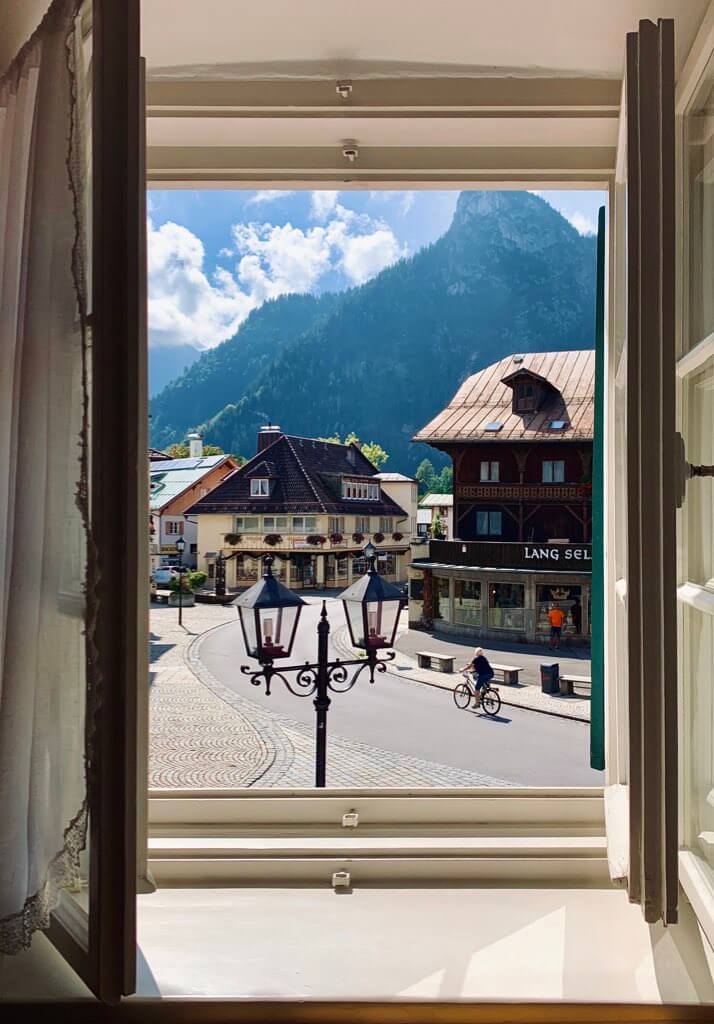
I looked up from my empty writing pad with a furrowed brow while slurping my morning coffee. I tried to distract myself by admiring the picture postcard houses outside my bedroom window, their ornate wooden balconies decked in wildflowers. In the distance, my eyes linger on a few patches of early morning mist dancing over the sea of ochre red rooftops. As I slowly finished my lukewarm coffee, the sun finally emerged, burning through the mist and bathing the distant mountain summit in an ethereal glow. It is then that I spotted the big wooden cross. I looked back at my writing pad, which just has this simple, very surreal heading:
‘Questions to ask Jesus.’
Very few things in life can prepare you for an interview with Jesus. Mind you, the years of Covid-19, made us ready to face anything. Still, I must now reveal to you that I wasn’t quite prepared to be speak to Jesus. To be precise, I was preparing for an interview with Frederik Mayer, who was going to play the lead role of Jesus in one of the longest running plays in the history of mankind. You might have heard of it. It is called The Passion Play. The Oberammergau Passion Play has been performed every year from 1634 to 1680 and every 10 years since 1680 (with a few exceptions) by the inhabitants of the village of Oberammergau, Bavaria, Germany. It is the oldest and largest of all passion plays and attracts a staggering half a million visitors. We had been specifically invited to tell the story of how the town was preparing for the 42nd version of the play.
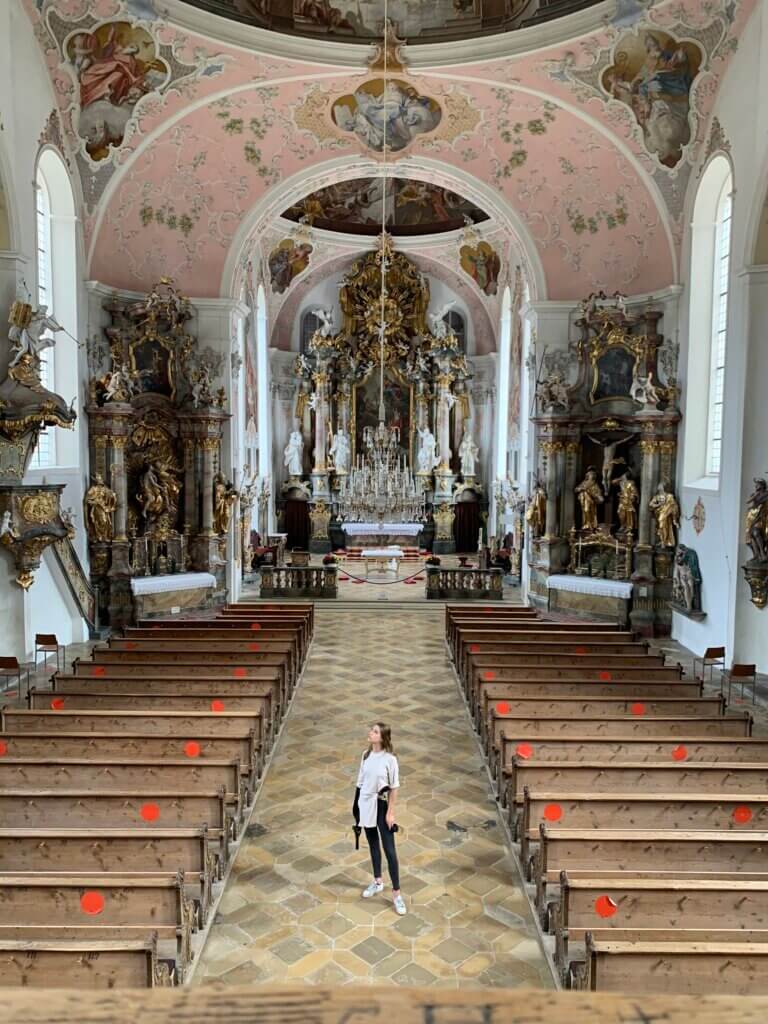
I have to be honest: I wasn’t just daunted by the interview but by the whole project. Let’s dig in for some personal context. While I am not a religious person, I do have the utmost respect for friends and strangers who find faith and strength through religion. I believe religion can be a force for good. My first ever major religious festival was Diwali. I was 9 years old, just moved to India. Picture a nation of almost 1.5 billion people celebrating the triumph of light over darkness, knowledge over ignorance, and good over evil. For a few days, the country puts all their economic and social worries behind them and unites across all religious and social divides to celebrate together. Having moved to Calcutta from the relative boredom of life in Oldham, Greater Manchester, experiencing this festival was an eye-popping revelation. People would play with fireworks ALL NIGHT. It was utter bedlam. It was an intoxicating festival to experience on so many levels. It was an excuse to get to know my neighbours. Festivals like Diwali provided the perfect opportunity for the shy, introverted 9-year-old me to get to know kids of my own age, which was really hard for me coming from a different language, culture, and world. Not only did I make some new friends, I also got to know their parents and grandparents. It was my first experience of the humbling power of religion and spirituality, but more importantly, that one thing we humans cannot live without and crave more than all: community.
When I got the invitation to come and witness the preparations for the Passion Play, I was initially skeptical whether I was the right person to write the story. I am not Christian nor religious. In my head, I saw the Passion Play purely as this wonderfully staged medieval religious drama. How can a play that is almost 400 years old have any relevance or meaning to someone like me or a kid on the street who has no clue about the life of Jesus and the story of the Bible?
These were some of the questions in my head when I strolled over to the Passion Play theatre to meet Frederik.
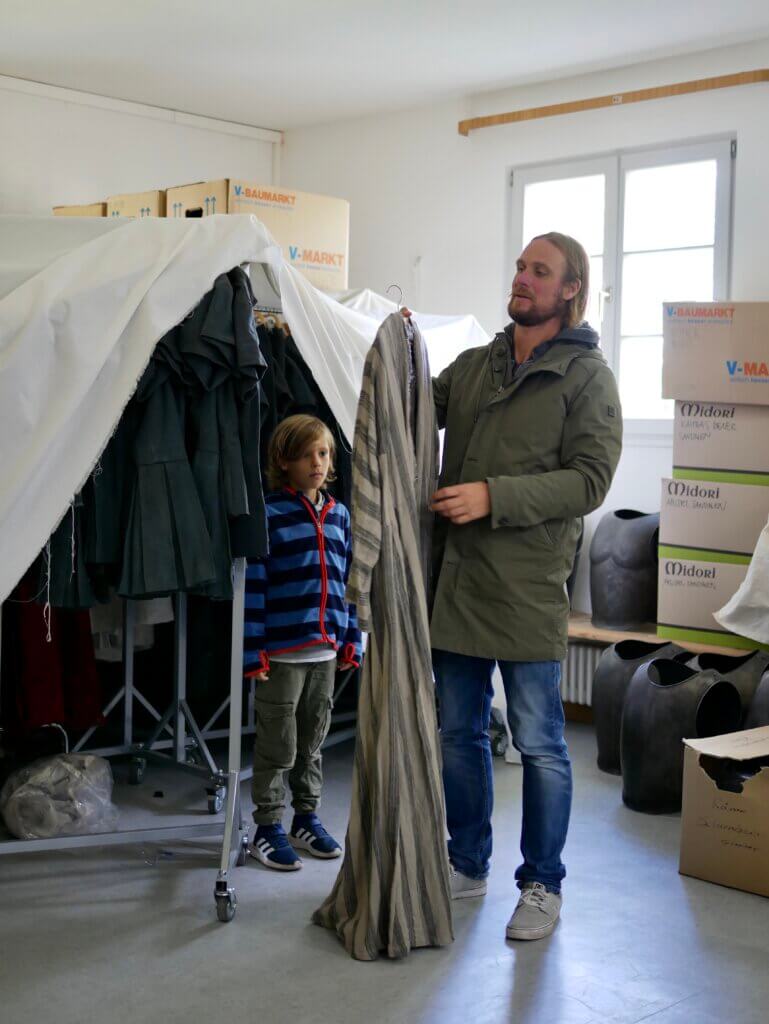
We are in a room where all the costumes for the play have been stored. Frederik looks a trifle nostalgic and also concerned as he dusts off the robe he will play Jesus in.
“I hope I can fit into this. I’ve gained a fair bit of weight over the last year or so during lockdown.”
I ask him if he’s concerned also about remembering his lines.
“Oh, I’ve definitely forgotten my lines, but it will come back in no time.”
Frederik’s daytime job is as a communications director for a Munich-based theatre company.
His role as Jesus is his only acting role this year, since he played the same role 12 years ago.
It will take half a year of rehearsals and another 6 months of shows—102 to be precise.
A year is a long time to take off work. How flexible and understanding are employers?
“Most employers understand and allow me to work reduced hours. Some actors take time off and others quit their jobs to dedicate themselves to the role. It’s a big commitment to make, putting your life on hold where everything revolves around the play. However, it happens only once in 10 years. You are happy to put your life on hold because you are part of this incredible atmosphere and big family for a year, with over 2,400 actors—half of your village’s population taking part. I’ve become friends with people much older than me. We’ve become much closer as a community as a result of the play.”
Once in ten years. That is a long time to wait for anything in life. Then came COVID-19.
“It was clear to me that we were not stopping for ‘now’ but completely,” recalls Rochus Ruckel, a 23-year-old aerospace engineering student from the village who is playing the role of young Jesus. “Then came the lockdown, and I felt kind of useless.”
He used the time wisely to finish off his bachelor’s thesis, but for others in the village, the advent of COVID-19 and postponement of the Passion Play was a huge blow. Hotels and restaurants lost all their bookings overnight and had to let go of staff. Local craftsmen who would have been working around the clock to help prepare all the stage props were also out of work.
Rochus gives me some context.
“Oberammergau for many might be a normal mountain village, but during The Passion Play, this place really transforms into something special. The whole place comes to life. The Passion Play is our passion. You feel proud to be an Oberammergauer. Growing up, you realized that our village was a little different from others.”
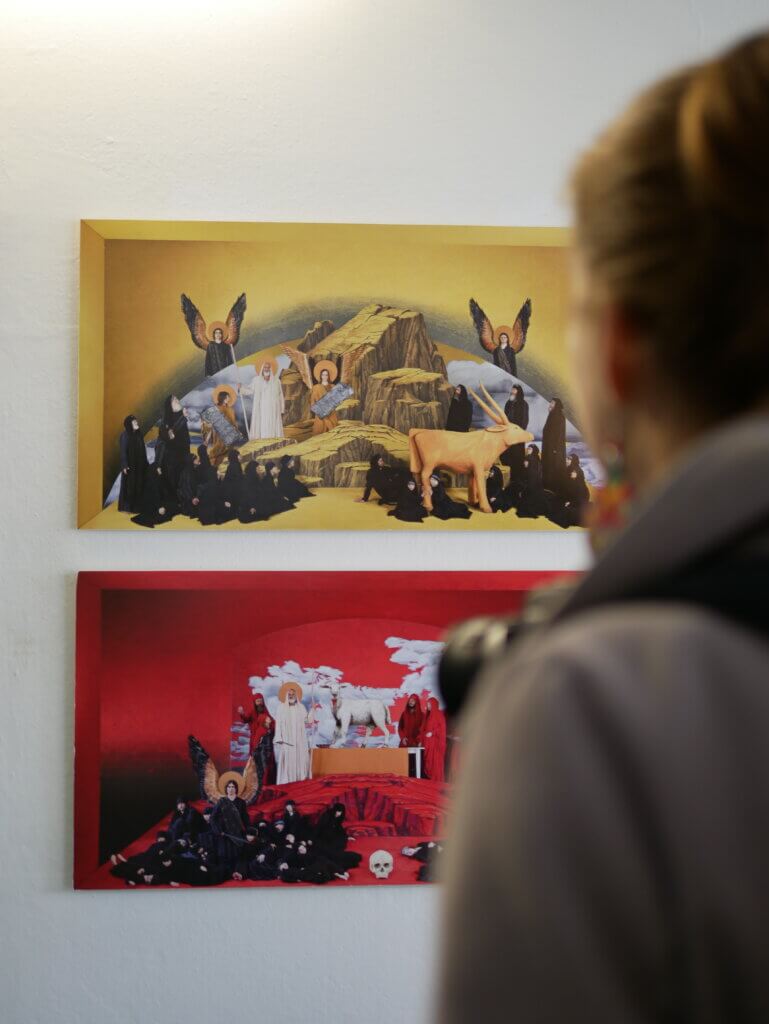
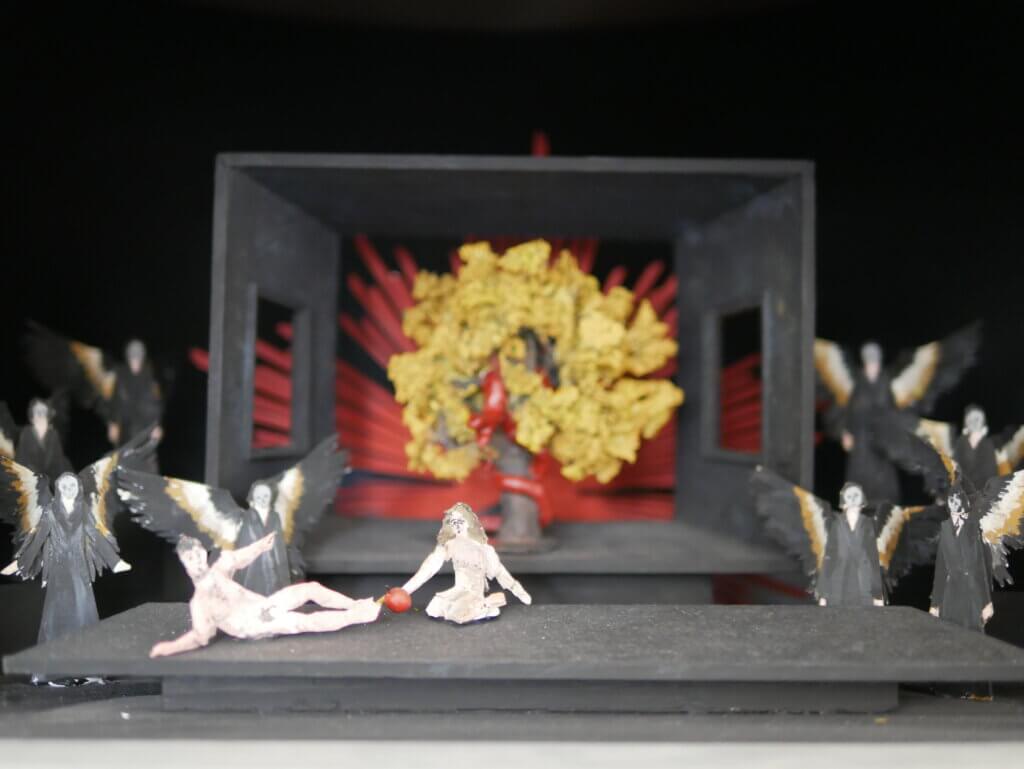
The Passion Play is definitely different and special. It is an incredible spectacle. Just walking out onto the Passion Play theatre amphitheatre stage, you can get an idea of the grand scale. I can’t think of any play I’ve seen which has 2,400 actors who will be on that stage and with live animals too. The mind boggles. Costumes have been designed to be as authentic as possible, while the set designs are truly a work of art and are stunning. 2030 is a long time to wait for the next Passion Play, I do recommend still visiting the town and getting a guided tour of the Passion Play Theatre. I also recommend spending some time in the local Oberammergau Museum to look at some of the stage sets and props used. When you learn about the number of locals involved in the play who have gone on to become actors, stage designers, and directors, you realize that the Passion Play, after 400 years, still has a strong relevance and importance to the lives of locals. I go back to my original dilemma: can a 400-year-old play have relevance for people like me or for young people who might have no interest in religion?
I was 42 during my visit to Oberammergau. I know I would have loved to have been part of something like the Passion Play as a kid and adult. While writing this, I had a flashback from the past. I went to a Church of England school in Manchester. I was probably 5 years old and taking part in the Christmas Nativity Play at school. I had a minor role to play as one of the three wise kings, but I still remember the warm, gooey mince pies they handed out after the play. I also remember the excitement of rehearsals leading up to the play and the adrenaline of performing it with my best friends in front of a captive audience. I did not realize it then, but what I experienced that night was a simple human need: the importance of feeling part of something, something that is bigger than yourself. I had that same feeling when I was taking part in my first Diwali celebrations in India. I have that feeling still when I am in a hostel surrounded by people from all over the world. I had that feeling too in Oberammergau. The people are extremely friendly. Even if you don’t take part in the play, you are part of the invisible supporting cast, staying and supporting the angel, a shepherd, King Herod, or Pontius Pilate in the play. Even without seeing the play and just speaking to the actors, their eyes wide with anticipation and excitement for the event, it was clear that the Passion Play is not just an important medieval religious play that saved the village from the plague. The play gave the villagers a sense of community, a shared sense of purpose and focus. It became a platform to express their creativity and give them the means to make a living. Speaking to all the actors, it is also clear that the Passion Play is a lifetime of memories, of people young and old, of people who are no longer. I am doubtful of the presence of a higher power, but the Passion Play definitely casts a spell in its own inimitable way, as it has done for others for many centuries past and to come.
Essential facts
The next Oberammergau Passion Play is scheduled to take place from May to October 2030. Preparations for the 43rd production are already underway. For more details, please check out the official website.